Stainless tube has become one of the most important materials in fabrication, engineering, industrial manufacturing, automotive performance, construction, and fluid systems. Its combination of durability, corrosion resistance, versatility, and precise dimensional stability makes it indispensable for both large scale projects and highly specialized applications. Whether a fabricator is building a high performance exhaust system, a sanitary food grade pipeline, or structural frameworks for demanding environments, stainless tube plays a crucial role in achieving long term reliability.
This in depth guide explores the properties, types, uses, benefits, and selection considerations for stainless tube. The goal is to provide a comprehensive understanding of why stainless tube continues to stand out as one of the most trusted materials across industries.
What Is Stainless Tube
Stainless tube is a hollow cylindrical stainless steel component designed to carry fluids, gases, or structural loads. It differs from stainless pipe mainly in how it is measured and used. While pipe is generally sized for fluid flow and pressure capacity, stainless tube is often chosen for precise applications where exact measurements and appearance matter, such as automotive fabrication, construction aesthetics, and equipment manufacturing.
Stainless tube is available in a wide range of diameters, wall thicknesses, finishes, and stainless grades. This diversity allows fabricators to match the tube characteristics to the requirements of each specific project.
Why Stainless Tube Is Preferred Over Other Materials
Many industries choose stainless tube over mild steel, aluminum, or composite materials due to several essential advantages:
Corrosion Resistance
Stainless steel is highly resistant to rust, oxidation, and chemical deterioration. This makes stainless tube ideal for marine environments, chemical plants, and outdoor installations.
Heat Resistance
Stainless tube can withstand extreme temperatures without warping or losing structural integrity. This is especially important for automotive exhaust systems, industrial piping, and heating applications.
High Strength
Despite its reasonable weight, stainless tube possesses excellent tensile strength, making it suitable for heavy duty structural and pressure applications.
Clean Appearance
The smooth, polished finish of stainless tube is used in architectural designs, handrails, furniture, equipment frames, and interior installations where visual appeal is important.
Easy Maintenance
Stainless tube requires minimal cleaning and no protective coating to maintain its durability.
These advantages contribute to its popularity across both functional and aesthetic installations.
Common Types of Stainless Tube
Stainless tube comes in multiple types, each serving unique purposes. Understanding these variations helps ensure accurate selection.
Seamless Stainless Tube
Seamless tubes are manufactured without a welded joint, providing superior strength and uniformity. They are used for high pressure applications, hydraulic lines, and demanding environments where reliability is critical.
Welded Stainless Tube
Welded tubes are produced by forming and welding stainless steel strips. They are more cost effective and suitable for general fabrication, construction, and decorative projects.
Round Stainless Tube
Round tube is the most common shape, used extensively for automotive exhausts, railings, marine components, and pipeline systems.
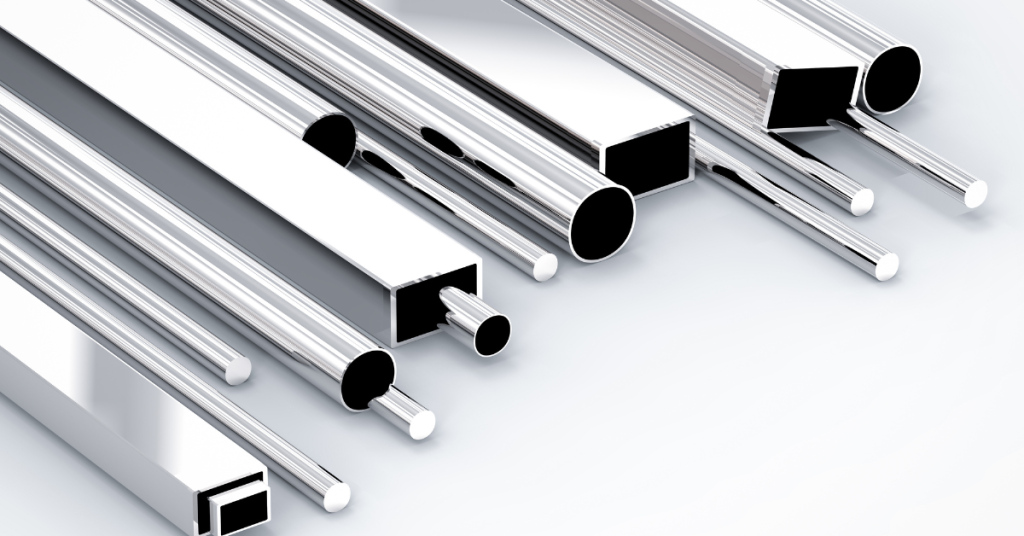
Square Stainless Tube
Square tube is widely used for structural support, furniture frames, and architectural elements.
Rectangular Stainless Tube
Rectangular tube provides enhanced rigidity and is ideal for load bearing structures, gates, racks, and industrial machine frames.
Popular Grades of Stainless Tube
The grade of stainless steel selected determines performance in specific environments.
304 Stainless Tube
The most versatile and widely used grade. It offers excellent corrosion resistance and weldability, making it suitable for food processing, automotive fabrication, and structural applications.
316 Stainless Tube
Provides superior corrosion resistance thanks to added molybdenum. Commonly used in marine environments, chemical processing plants, and outdoor installations exposed to saltwater.
321 Stainless Tube
Used in high temperature applications such as turbo exhausts and aerospace systems due to improved thermal stability.
409 Stainless Tube
Common in automotive exhaust systems, offering heat resistance and cost efficiency while still providing moderate corrosion protection.
Each grade offers different strengths, performance characteristics, and environmental resistance, allowing fabricators to choose the best fit for each project.
Engineering and Fabrication Uses of Stainless Tube
Stainless tube serves a wide range of industries, each relying on its durability and performance.
Automotive and Motorsports
Stainless tube is essential for exhaust fabrication, roll cages, intake piping, turbo manifolds, and chassis modifications. Its heat resistance and corrosion protection make it reliable under extreme operating conditions.
Marine and Offshore
Saltwater environments require materials that resist corrosion. Stainless tube is used for boat rails, marine exhausts, ladders, structural braces, and equipment frames.
Food and Beverage Production
Sanitary stainless tube prevents contamination, resists chemicals, and maintains hygiene. It is used in pipelines, processing equipment, breweries, and dairy systems.
Architecture and Construction
Handrails, guardrails, frames, roofing supports, and decorative elements often rely on stainless tube for both strength and visual appeal.
Industrial Manufacturing
Factories use stainless tube in conveyor systems, pressure lines, machine frames, and chemical processing systems.
HVAC and Ventilation
Stainless tube supports ducting, flue systems, burners, and high temperature exhaust ventilation.
This diversity demonstrates how stainless tube has become a foundation material for modern infrastructure and fabrication.
Mechanical Properties That Make Stainless Tube Valuable
Stainless tube is engineered to meet strict mechanical standards. Key properties include:
- Tensile strength
- Yield strength
- Hardness
- Resistance to pitting and cracking
- Ability to withstand pressure cycles
- Dimensional stability
- Thermal expansion control
These mechanical characteristics ensure that stainless tube performs reliably in systems requiring precise engineering.
Designing Systems With Stainless Tube
When planning a system that incorporates stainless tube, fabricators must consider several factors:
Tube Diameter
This affects flow capacity in fluid systems and strength in structural systems.
Wall Thickness
Thicker walls handle higher pressure and greater external force.
Bend Requirements
Some applications require mandrel bends or welded sections depending on space and flow needs.
Surface Finish
Polished finishes are used for visible architectural applications, while unpolished finishes may suffice for industrial use.
Welding Techniques
TIG welding is often used for stainless tube to ensure clean, strong welds.
Environmental Exposure
Marine and chemical environments demand higher grade stainless such as 316.
Proper planning ensures that stainless tube fulfills both strength and functional requirements.
Advantages of Stainless Tube in Performance and Lifetime Value
One of the strongest reasons for choosing stainless tube is its long lifetime and cost efficiency. While stainless tube may cost more initially, it significantly reduces maintenance, replacement frequency, and system failure risk. Its long term value benefits industries that rely on consistent performance over many years.
Other advantages include:
- Excellent strength to weight ratio
- High resistance to scaling and heat distortion
- Compatibility with precision fabrication
- Versatile shaping and finishing options
- Reduced environmental contamination
- Ability to meet strict regulatory standards
Stainless tube is ideal for industries that cannot afford downtime or performance loss due to material failures.
Comparison Table: Stainless Tube vs Other Materials
| Property | Stainless Tube | Mild Steel Tube | Aluminum Tube |
|---|---|---|---|
| Corrosion Resistance | High | Low | Moderate |
| Heat Resistance | High | Moderate | Low |
| Strength | High | High | Moderate |
| Weight | Moderate | High | Low |
| Maintenance | Low | High | Low |
| Lifespan | Long | Short | Moderate |
This table highlights why stainless tube is preferred for demanding, high performance applications.
Fabrication Techniques for Stainless Tube
Skilled fabrication is necessary for high quality results. Common techniques include:
Cutting
Precision cutters ensure clean edges for tight welding joints.
Bending
Mandrel bending maintains smooth interior diameter, ideal for exhaust systems and fluid transfer lines.
Welding
TIG welding is most common due to the clean, controlled weld bead it produces.
Finishing
Polishing improves appearance and resists surface corrosion.
Fabricators often choose stainless tube because it responds predictably to these techniques.
Anchor Placement
You can find high quality Stainless Tube selections suitable for automotive, industrial, and structural applications.
Final Insights
Stainless tube stands as a dependable and versatile material across countless industries. Its corrosion resistance, strength, heat tolerance, and clean appearance have made it a preferred choice for systems requiring precision, durability, and longevity. From exhaust fabrication to architectural structures and food processing pipelines, stainless tube continues to deliver performance that meets the demands of modern engineering.
This in depth guide provides the essential understanding needed to choose and apply stainless tube effectively in any fabrication or construction project.